Buying a DTF printing machine is a bigger decision than most first-time buyers expect, not because the machines are complicated to operate, but because the wrong choice can quietly sink a business before it gets off the ground. The gap between a printer that makes money and one that becomes an expensive paperweight usually comes down to a handful of specs and habits that aren’t obvious until you’re already committed. Here’s what actually matters before you buy.
Decide Your Budget Tier First
DTF printing genuinely doesn’t require a massive upfront investment to get started, but the budget tier you choose shapes everything else about your setup. A lean approach a converted desktop printer, a manual clamshell heat press, and a small curing oven can get you running for around $1,000, and it’s a reasonable way to prove out a business idea before committing further.
The trade-off is real, though: converted printers are prone to frequent printhead clogs and slower production speeds, which becomes a genuine bottleneck once orders pick up.

A commercial-scale setup, typically starting around $4,000, trades that lower upfront cost for a dedicated dual-head printer, automated powder shaking, an inline dryer, and better ink circulation, meaning far higher output capacity and a workflow that doesn’t demand constant babysitting. The right choice depends less on how much money you have and more on how confident you are in the business model you’re chasing.
If you’re still testing the waters, lean is fine. If you already know your order volume will be steady, commercial-scale pays for itself faster than it looks like it will on paper.
Printhead Quality Matters More Than Marketing Copy Suggests
Not all DTF printers are built the same way, even when specs look similar on a sales page. A converted desktop inkjet printer repurposed for DTF work is fundamentally different from a printer built around a genuine, purpose-designed printhead; the latter typically offers real automated ink circulation and dedicated RIP (raster image processing) software, rather than workarounds bolted onto consumer hardware.
That difference shows up directly in print consistency, resolution, and how often you’re troubleshooting instead of producing. If a listing doesn’t specify the printhead brand and type, that’s worth asking about directly before buying.
Factor In the “Maintenance Tax” Before You Commit
This is the part most first-time buyers underestimate. DTF printing relies on a heavy titanium dioxide white ink base, and if the machine sits idle for even a couple of days, that ink settles and clogs the lines, sometimes permanently damaging the printhead.
This isn’t a minor inconvenience; it’s a genuine operational requirement. If you can’t commit to running the machine or performing maintenance cycles daily, the printer itself becomes a liability rather than an asset, regardless of how good its specs are on paper.
If daily commitment isn’t realistic yet, it’s worth outsourcing your first prints to an established transfer house while you build up steady order volume and prove your business model. That way, you’re only buying the machine once outsourcing fees genuinely stop making sense.
Think Beyond the Printer Itself
The printer’s price tag rarely reflects the full cost of a working setup. Curing and drying the film is just as important as printing it. Dusting long rolls manually produces uneven, inconsistent results and slows everything down. Budget separately for either a dedicated curing oven for batch work, or an automated powder shaker and inline dryer if you’re running roll-to-roll production at scale.
Ventilation is non-negotiable, not optional. Curing the hot-melt adhesive powder used in DTF transfers releases vapors and plasticizers into the air, and running a machine in an unventilated space is a real health hazard. Plan to either vent the exhaust directly outside or invest in a dedicated commercial fume extractor from day one.
Match Capability to the Work You Actually Want
Different DTF businesses lean on different strengths. If your plan involves same-day local gang sheet service, throughput and consistent print speed matter most. If you’re targeting contract work with local screen-print shops on complex, multi-color jobs, reliability and color accuracy under pressure matter more than raw speed.
And if you’re eyeing higher-margin niches like heavy workwear, sports accessories, or branded inner-neck labels, detail resolution and substrate flexibility become the deciding factors. Knowing which of these paths you’re aiming for before you buy makes it much easier to evaluate whether a given machine’s specs actually fit your plan.
See also: Trusted Business Hotline 0120 616 877 Verified Tech Connection
Where the OMTech Aurora D1 Fits
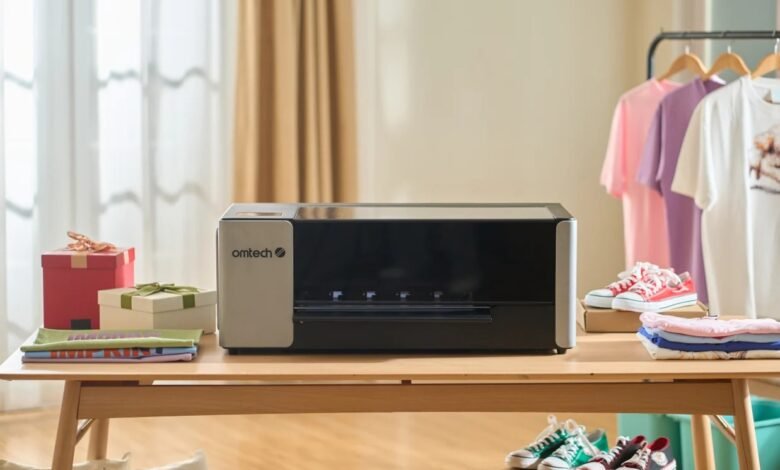
For buyers who’ve thought through the above and are ready to move past outsourcing, the OMTech Aurora D1 is built around exactly this set of priorities. It’s a true 14-inch roll-fed system with a genuine Epson F1080 printhead, not a converted desktop unit, which means real automated ink circulation and dedicated RIP software rather than the workarounds that plague budget setups.
It delivers steady, consistent output well-suited to a beginner scaling toward commercial volume, with enough resolution and detail capability to support higher-margin niche work alongside standard apparel printing.
It’s also priced and positioned as a genuine bridge between the lean and commercial tiers, capable enough to support a real, growing business, without requiring the full investment of an industrial-scale setup on day one.
The Bottom Line
The right DTF printer isn’t the one with the flashiest spec sheet; it’s the one that matches your budget tier, your capacity for daily maintenance, and the specific type of work you’re planning to chase. Get those three things right, and the machine becomes an asset. Get them wrong, and even a capable printer turns into an expensive source of frustration.