The technology that spent a decade being “almost there” has arrived. With reliable machines under 300 dollars, an explosion of engineering-grade materials and software that practically runs itself, 3D printing has crossed the line from promising to practical.
For years, 3D printing occupied an awkward middle ground. Too expensive and unreliable for most consumers, too slow and limited for serious manufacturing. That era is over. The global 3D printing market surpassed 20 billion dollars in 2025, desktop printer shipments crossed one million units in a single quarter, and the fastest growing adopters are no longer tech enthusiasts – they are dentists, automotive engineers, architects and teachers. Now everybody owns a 3D printer or are considering buying one.
The question is no longer whether 3D printing works. It is what took so long.


The hardware revolution
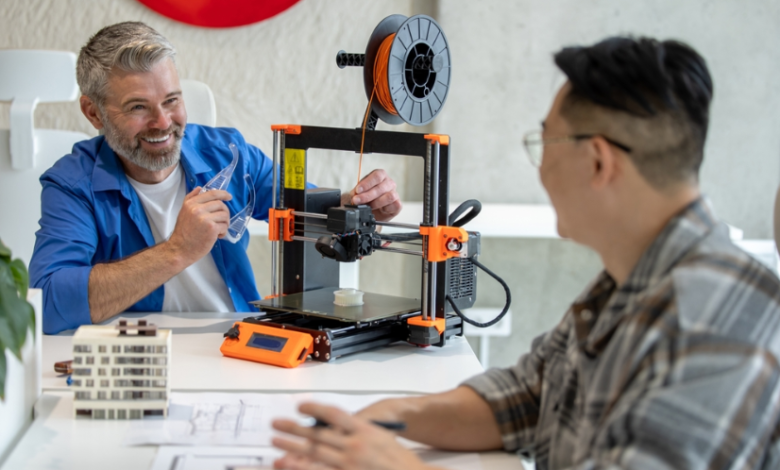
The machines that have driven mainstream adoption look nothing like the temperamental kit printers of 2015. Today’s consumer FDM printers ship fully assembled, auto-calibrate on first power-up, and print at speeds that would have been classified as professional-grade three years ago. Bambu Lab’s entry into the market forced an industry-wide reckoning with what a sub-300 dollar printer could deliver, and competitors like Creality, Prusa and Anycubic have responded with machines that match or exceed those benchmarks.
Enclosed print chambers, once a premium feature, are becoming standard even on mid-range models. That matters because enclosures unlock engineering materials like ABS, ASA and nylon that warp or crack in open-air environments. Multi-material systems that automatically swap filaments mid-print have gone from novelty to practical tool, enabling functional parts with different mechanical properties in a single job.
At the professional end, the movement is toward speed and scale. Core XY architectures and high-flow hotends have pushed print speeds past 500 mm per second on production machines. Large-format printers with build volumes exceeding 350 mm cubed are available for under 1,500 dollars. And resin printing, which delivers surface finishes that FDM cannot match, has become dramatically more accessible with machines starting around 200 dollars.
Materials: The real story
Hardware gets the headlines, but materials are where the transformation runs deepest. The days when 3D printing meant brittle PLA trinkets are long gone. The filament market alone is projected to grow at over 15 percent annually through 2030, driven by demand for functional, end-use parts rather than decorative prototypes.
PLA remains the entry point – easy to print, biodegradable and available in every colour imaginable. But the action is elsewhere. PETG has become the workhorse for mechanical parts: strong, chemical-resistant and forgiving to print. ASA delivers UV stability for outdoor applications. TPU provides rubber-like flexibility for gaskets, phone cases and wearable components. Carbon fibre reinforced nylon offers stiffness-to-weight ratios that rival machined aluminium in certain applications.
And then there is the emerging tier. PBT for electrical housings, PEEK for aerospace and medical implants, metal-infused filaments for specialised tooling, and wood, ceramic and stone composites for decorative and architectural work. The material catalogue has expanded from a handful of options to hundreds, and specialist producers are filling niches that the major manufacturers have not yet reached.
Companies like 3D Experten, one of the largest Nordic suppliers of 3D printing equipment, have responded by stocking not only third-party filaments from major brands but also developing their own premium line – 3DE Premium Filament – in variants tailored to specific applications. It reflects a market reality: customers are no longer just buying printers. They are buying into an ecosystem of materials, each suited to a different job.
Software: The invisible enabler
The least appreciated part of the 3D printing revolution is software. A decade ago, getting a model from screen to successful print required deep knowledge of slicing parameters, manual support placement and hours of trial and error. Today, programs like Bambu Studio, PrusaSlicer, Cura and OrcaSlicer handle most of that automatically.
Automatic bed adhesion settings, intelligent support generation, adaptive layer heights that speed up flat sections while preserving detail on curves, and material-specific profiles that optimise temperature, speed and retraction for each filament type – the software does the heavy lifting. For most prints, users select a material, choose a quality preset and hit start.
CAD software has followed a similar trajectory. Fusion 360, Onshape and FreeCAD have made parametric design accessible to non-engineers, while tools like Tinkercad provide an entry point for students and beginners. The pipeline from idea to physical object has never been shorter.
See also: Top 3 Must-Have Tech Gadgets for College Students in 2025
Who is actually using this
The user base has expanded well beyond the maker community. In healthcare, 3D printing produces surgical planning models, dental aligners, custom prosthetics and patient-specific implants. The dental sector alone is one of the fastest growing verticals, with clinics printing crowns, bridges and surgical guides in-house rather than outsourcing to labs.
In automotive, manufacturers use additive manufacturing for everything from rapid prototyping to production jigs, fixtures and low-volume end-use parts. The weight savings from topology-optimised 3D printed components are measurable in fuel efficiency and performance.
Education has embraced the technology at every level. Primary schools use it to bring geometry and design thinking to life. Universities integrate it into engineering, architecture and medical curricula. Libraries and makerspaces provide public access to printers, creating a generation of users who consider 3D printing a normal tool rather than an exotic technology.
And in homes and small workshops, the practical applications are endless. Replacement parts for appliances, custom organisers and storage solutions, RC car components, garden tool adapters, phone mounts, cable management clips – the long tail of useful everyday objects that are not worth mass-producing but perfectly suited to printing one at a time.
The service gap
One persistent challenge in the consumer market is support. The rapid price erosion that made hardware affordable has also attracted a flood of direct-from-factory sellers on global marketplaces, where prices are low but post-purchase support is effectively non-existent. When a printer malfunctions or a user cannot get a material to behave, the absence of accessible technical help can turn an affordable purchase into an expensive paperweight.
This is where specialist retailers have carved out a defensible position. Companies like 3D Experten differentiate by testing every machine before shipment, offering phone and remote desktop support, and providing service agreements that cover technical assistance and logistics. For buyers who value reliability over the lowest possible price – particularly businesses, schools and institutions – that proposition carries real weight.
What to expect over the next few years
The trajectory is clear: faster machines, broader material options, larger build volumes and increasingly intelligent software. Metal 3D printing, once confined to industrial labs with seven-figure equipment budgets, is beginning to reach smaller operations through more affordable systems and metal-infused FDM filaments that can be sintered into solid metal parts.
Sustainability is becoming a genuine differentiator. Additive manufacturing can reduce material waste by up to 95 percent compared to subtractive methods, and the ability to produce parts locally rather than shipping them globally aligns with the supply chain resilience that companies have been pursuing since the pandemic exposed the fragility of just-in-time logistics.
Multi-material and multi-process printing – combining different materials, colours and even manufacturing techniques in a single machine – is moving from research into commercially available products. The line between a 3D printer and a general-purpose digital fabrication tool is blurring.
For anyone who dismissed 3D printing as a novelty five years ago, the landscape today is unrecognisable. The machines are faster. The materials are stronger. The software is smarter. And the ecosystem of retailers, service providers and communities supporting the technology means that getting started – and staying productive – is easier than it has ever been.